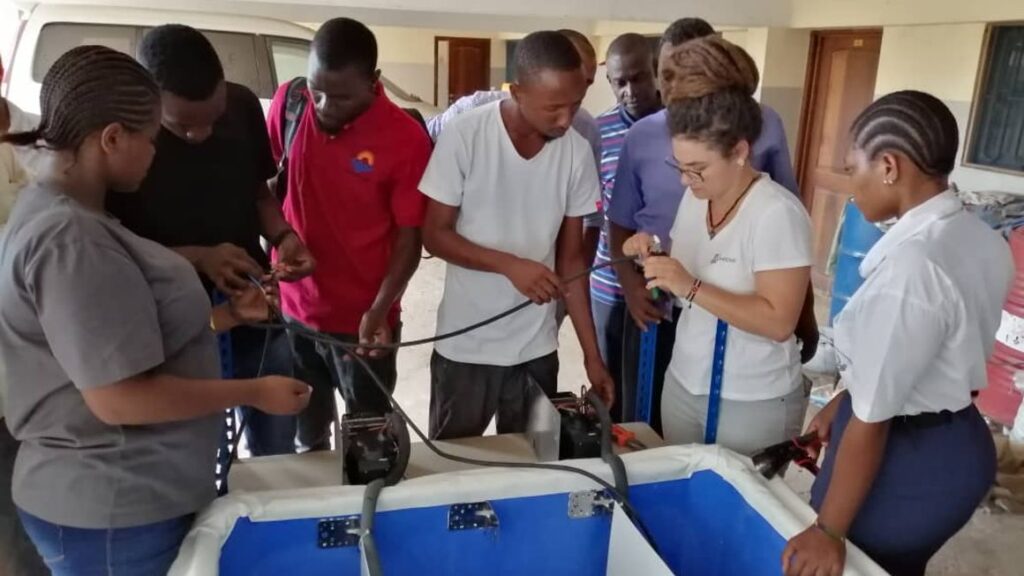
The challenge of postharvest losses that Small and Medium Enterprises (SMEs) in the sectors of fisheries, agriculture and livestock have been grappling with, might soon get a solution, thanks to the introduction of a new cooling technology.
German firms, Solar Cooling Engineering and Phaesun have partnered with a local company, Resco Tanzania Ltd to introduce a simple solar cooling technology.
For a long time producers in those sectors have been losing their yields due to lack of simple storage technologies—a situation that has been eating into their cash flow.
To address the challenge, Solar Cooling Engineering and Phaesun in collaboration with local Resco Tanzania Ltd, have introduced the solar solution technology of refrigeration which is now at the pilot stage in Dar es Salaam.
Speaking yesterday to solar energy stakeholders, Solar Cooling Engineer Sonja Mettenleiter said the technology works in three areas that include storage of milk, making ice for fishermen and storing produce as fruit.
“Most of the connecting devices are available here in Tanzania, except for the few core components that we import from Germany,” said Ms Mettenleiter.
“We don’t want to import the complete systems because our target is to create employment for local people.”
Noting it is not necessary to sell their yields during the harvest season, she said that if they would be able to extend the life of products, mangoes for-instance, it will help them to increase their income.
“They can store for more than eight month depending on the amount of water in the fruits,” she explained.
Resco Tanzania Ltd executive director Musa Mzumbe said the two-year project started last year and will end in December.
It is currently being piloted in the Dar es Salaam region and will later officially commercialise in the market.
“This is new in the country where we do not have such a kind of solar technology, so we encourage farmers to join groups so that they can be connected,” he said.
Phaesun project manager Geraldine Qnelle said: “Our local partners will help in ensuring the technology reaches a large number of SMEs so that they can improve the value chain system.”
“We have already installed this technology in many countries for example in Kenya we install diary system which serve over 500 smallholder’s farmers and the feedback is very positive,” she said.
Source: thecitizen.co.tz